
Coffee, eggs and mash – a universal code that instantly uplifts one’s spirits by triggering the release of Serotonin, the ‘Happiness’ chemical in our bodies. It’s hard to imagine a western cafe that does not offer coffee, eggs and mashed potato on its all-day dining menu.
But did you know that your plants can be SUPPOSEDLY (*warning) nourished by this same combination of ingredients?
To be exact, i do mean, ‘NPK’ – not an acronym for some nefarious political factions , hate groups or cults.
In fact, for healthy plant growth, these are the three essential elements or nutrients required by the plants: NITROGEN (N), PHOSPHOROUS (P) and POTASSIUM (K) (from its Latin name: Kalium). Even humans require these minerals, and more, to support many of our body functions and build muscles.
BUT. Before you toy with the thought of simply tipping your cold cuppa into that conveniently placed potted plant in the office…might I remind that there is a catch to adding Kopi-O Kosong! [Make sure you read the section on the chemistry of coffee below.]
Many home gardeners recommend and regurgitate the mixing spent coffee grounds from your first or second brew into the soil. Yes, black brewed coffee is mildly acidic and the washed grounds are close to neutrality, so letting the soil drink some coffee does not alter the soil pH drastically BUT CAN STUNT THE GROWTH OF YOUR PLANT. On the other hand, egg shells, a source of calcium ions, can simply be crushed or ground before sprinkling on the soil! And more meticulously, your food scraps can be put away in a composting bin.
The objective of either of the methods above is for the organic matter (the coffee grounds, the shells and the food scraps) to naturally break down through the action of flourishing bacteria in warm and moist conditions. The result is a mash of natural fertiliser full of minerals, that is sustainable and helps you to reduce waste.
The Chemistry of Coffee, Egg Shells and Food Scraps
Coffee – bad news for your plants (and compost)!
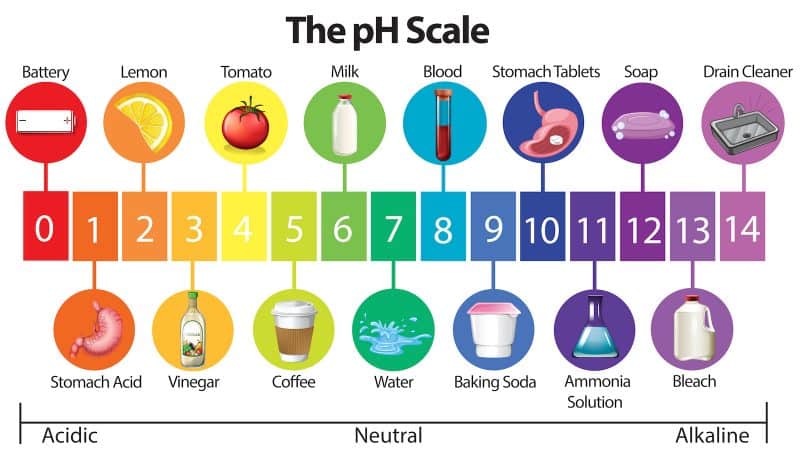
The pH value – a measure of how acidic a substance is – of coffee shows that the ‘liquid gold’ is a weak acid (the smaller the number on the pH scale, the stronger the acid; the larger the number, the more alkaline the substance is).
Organic compounds in Coffee
The acidic profile of a particular cup or type of coffee that you so love can be stripped down (literally, by stripping the coffee fruit of its cherry red skin and the innards to obtain the bean) to a large number of organic acids found in the raw, green bean or processed, roasted bean.
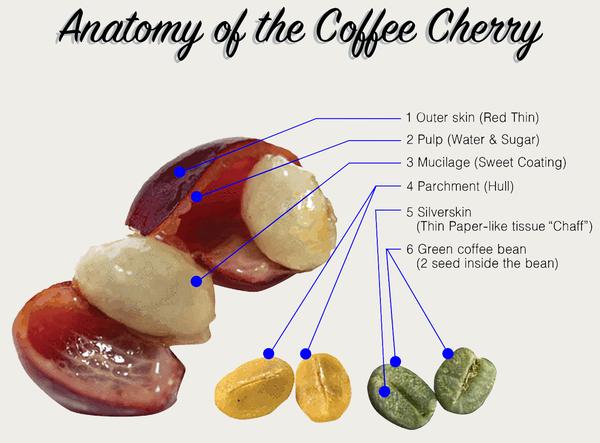
Some acids are naturally manufactured by the coffee plant through cellular respiration, while others evolve from the chemical changes of these pre-existing acids, brought about by a magical marriage of method, equipment and expertise during the roasting and brewing processes.
Predominantly, 5 different types of organic acids can be found in a typical brew of roasted coffee: citric acid, acetic acid, malic acid, quinic acid and chlorogenic acid. These occur naturally in many fruits and vegetables.
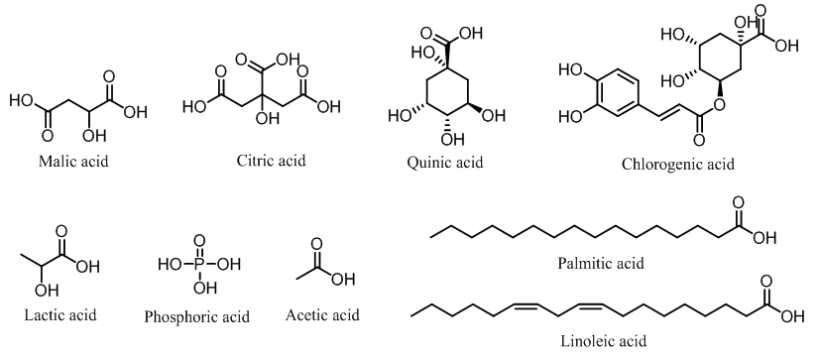
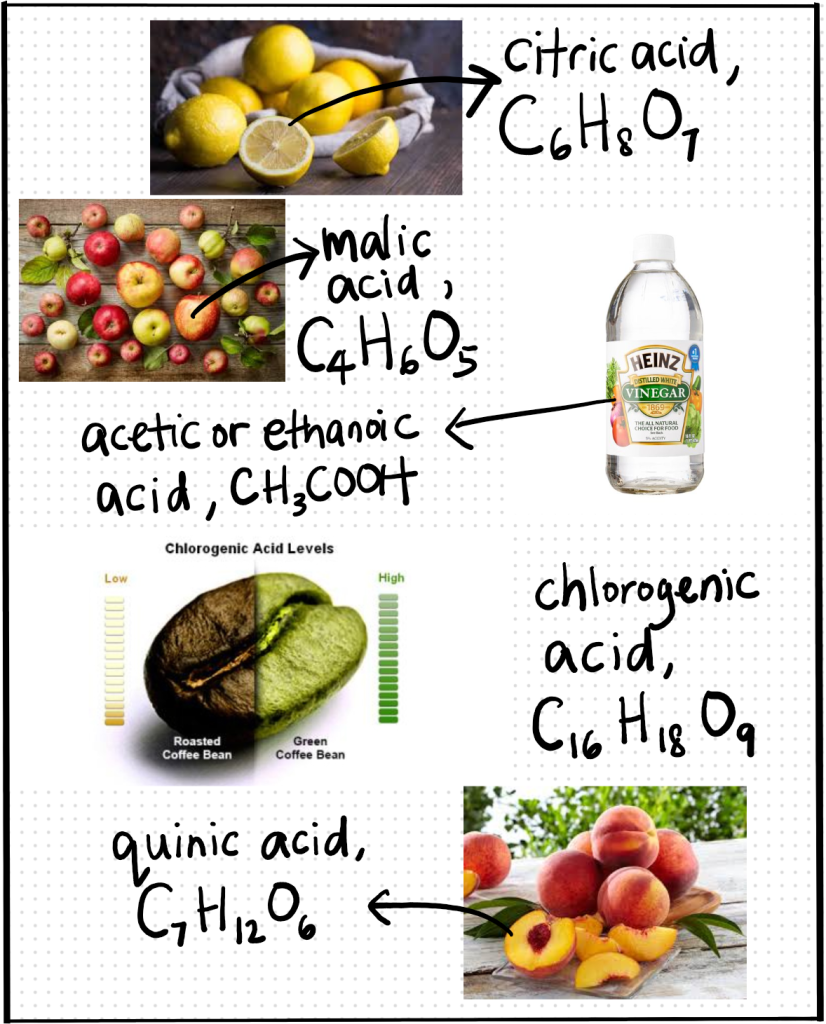
Apart from these organic acids, coffee also contains caffeine, the controversial substance that helps coffee-drinkers stay alert temporarily, appears to reduce risk of some cancers while also triggering insomnia, anxiety and heart palpitations in others.
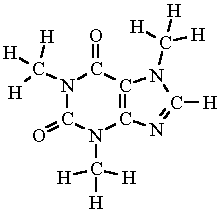
The structural formula of Caffeine, C8H10N4O2
It may seem beneficial to have caffeine in the soil since it is rich in nitrogen, one of the essentials for healthy plant and microbes growth. However, if the soil is already rich in nitrogen, introducing more nitrogen in the form of coffee grounds will throw off the balance of carbon and nitrogen in the soil which affects how well other nutrients are released to the plants.
‘Better yet’, according to an article by the New York Times, How Caffeine Evolved to Help Plants Survive and Help People Wake Up:
When coffee leaves die and fall to the ground, they contaminate the soil with caffeine, which makes it difficult for other plants to germinate. Coffee may thus use caffeine to kill off the competition.
Coffee plants also use caffeine to ward off insects that would otherwise feast on their leaves and beans. At high doses, caffeine can be toxic to insects. As a result, insects have evolved taste receptors that help them avoid ingesting caffeine.
https://www.nytimes.com/2014/09/04/science/how-caffeine-evolved-to-help-plants-survive-and-help-people-wake-up.html
So, adding coffee grounds to the soil, even if it has been rinsed for a few times, will introduce caffeine that will ward off useful organisms like bacteria and earthworms! Counter-productive to the decaying process of organic matter that releases the nutrients for the plants to absorb!
Egg Shells – rich in Calcium
Not just the egg shells, the exoskeletons of mollusks like clams and oysters, are also made of the chemical Calcium Carbonate, CaCO3. This white solid is also found in marble statues and chalk.


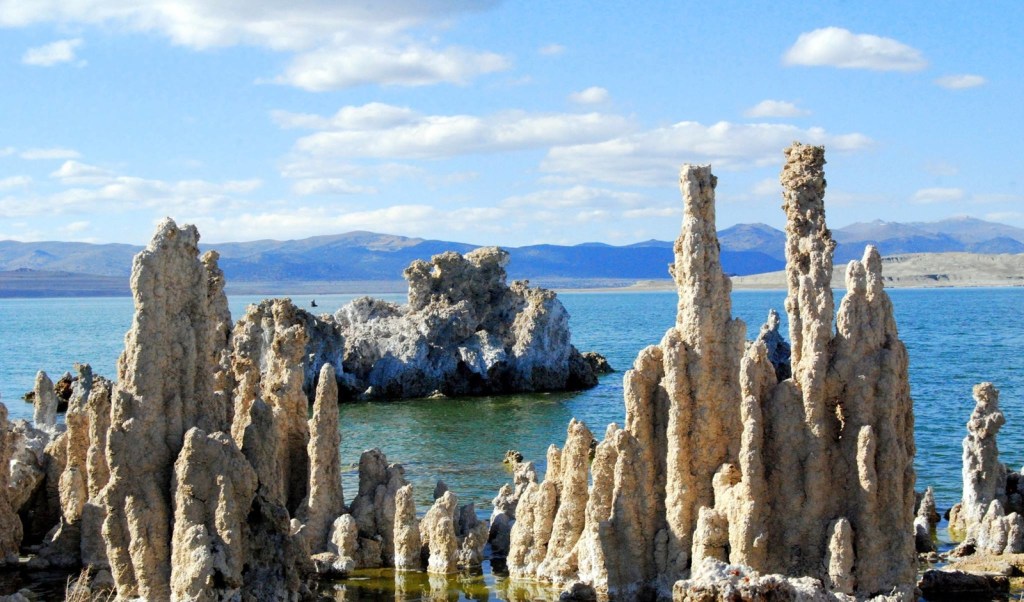
Clockwise from left: The Parthenon in Greece, Michelangelo’s Statue of David in Florence, Italy and Mono Lake Tufa State Natural Reserve in California are all magnificent natural and man-made artefacts of calcium carbonate. (Extracted from TheGuardian.com, Michelangelo.org and NASA.gov)
To act as a fertiliser, calcium carbonate, or limestone, should preferably be made into powder before it’s mixed into the soil as it does not dissolve well on its own in water. However, the organic acids present in the soil (due to naturally-occurring decomposition of organic matter) will help to dissolve the white powder and release the calcium ions as minerals into the soil for the plants to take them up easily.
Apart from that, calcium carbonate is also a ‘pH adjuster’. When added to acidic soils, it will react away the acids by neutralisation to bring the soil pH higher for better plant growth. Most plants thrive in soil pH of 5 to 6; house plants that are happier in slightly higher pH are bamboo, geranium and oxalis (pH 7.5-8), while for crops, tomatoes, garlic and cauliflower prefer pH values of pH 7-7.5.
Food Scraps – rich in basic building blocks of life
Natural food ingredients are all organic matter. WE are also organic matter. ‘Organic’ simply refers to compounds that contain mainly carbon, oxygen and hydrogen atoms chemically bonded together.
There is a whole host of wisdom to building a perfect compost pile, which I will not go into detail here. In general, many things that can be eaten or grown in a garden (vegetable scraps, fruit peels, fallen leaves, twigs, etc) can be thrown into a compost bin and let the microorganisms do their work to decompose or break down the large, complex molecules into smaller, simpler substances over the course of months.
When the carbon-rich and nitrogen-rich matter break down, the carbon and nitrogen are released into the compost pile, along with other minerals like phosphorus, potassium and sulfur. The carbon and nitrogen nutrients feed the microbes, even draw garden decomposers like earthworms to the pile, and help them flourish. So by the time your compost is ready to be used as fertiliser, it returns the same powerhouse of nutrients back into the soil, ready to be recycled by the plants!
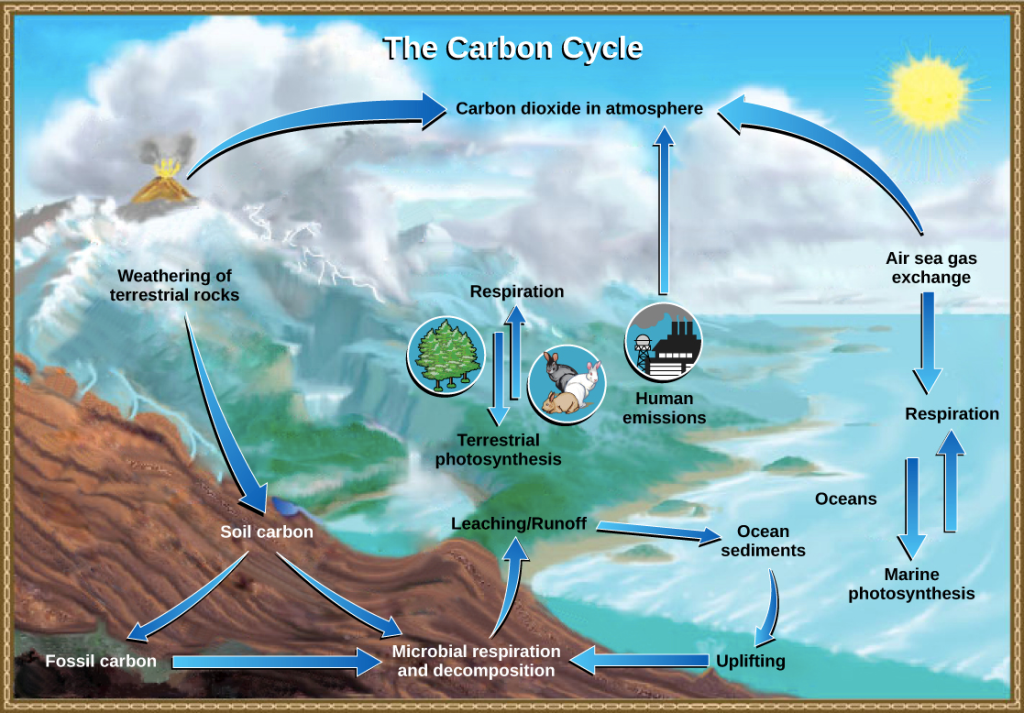
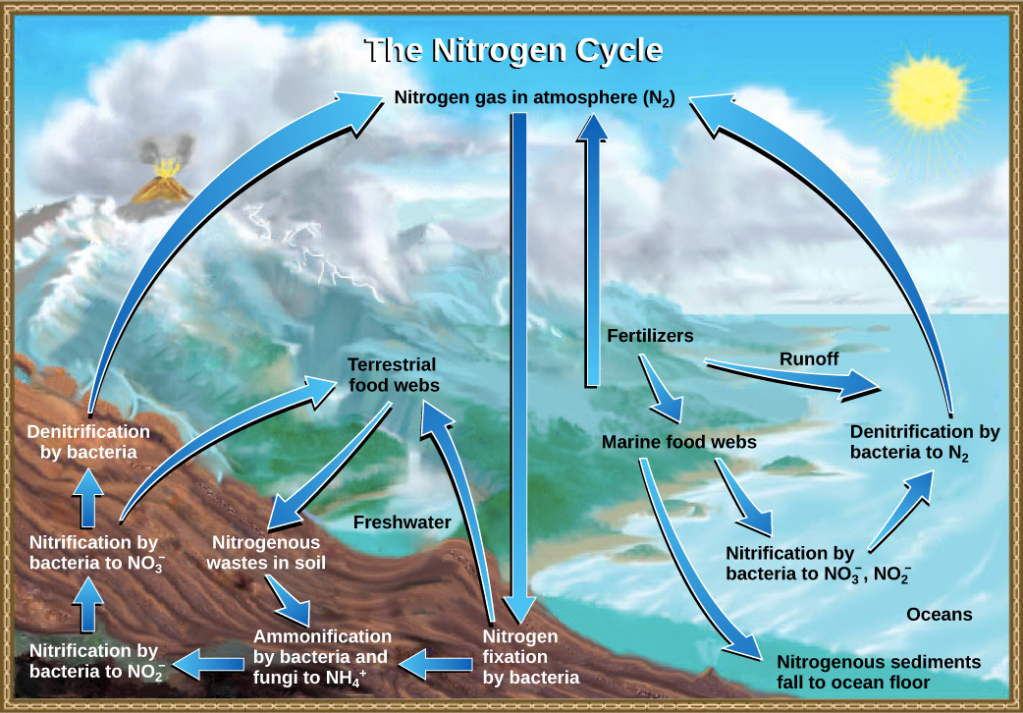
Infographics of carbon and nitrogen cycles. Extracted from KhanAcademy.org
Featured image in left panel: Garden Path at Giverny, 1902 by Claude Monet, extracted from Claude-monet.com

