I have the simplest tastes. I am always satisfied with the best.
Oscar Wilde
Food plays a big part in many Singaporeans’ lives. It’s easy to comprehend why – our speck of a city state of 721.5km2 is home to 114 hawker centres with countless of stalls; more than 103 (this figure from a 2015 SBR article!) malls with cafes, food courts and restaurants, excluding kopitiams and other instagram-proof cafes and restaurants that continually pop up in the next gentrified neighbourhood. Not to mention, 44 Michelin-starred restaurants (the 8th most Michelin-starred City in the World) and 58 street food stalls featured in Bib Gourmand in 2019!
Okay, before you think I’m going to be reviewing some of these most coveted restaurants found in Singapore…
I’m actually going to touch on one of the fundamental reasons responsible for the most complex, marvelous, out of this world flavours – that the Michelin-decorated chefs have undoubtedly mastered in order to be conferred those macarons – the organic functional groups that may have caused you to tear your hair out ;p DREADS.
Lai, lai (Come, come)…before we go on to the pesky molecules, it is paramount that we revisit the fact that there are 5 primary tastes that we are most familiar with: bitterness, sourness, sweetness, saltiness and umami (6th: astringent, as in tart tea or pineapple, 7th: pungent, as in spices and herbs)
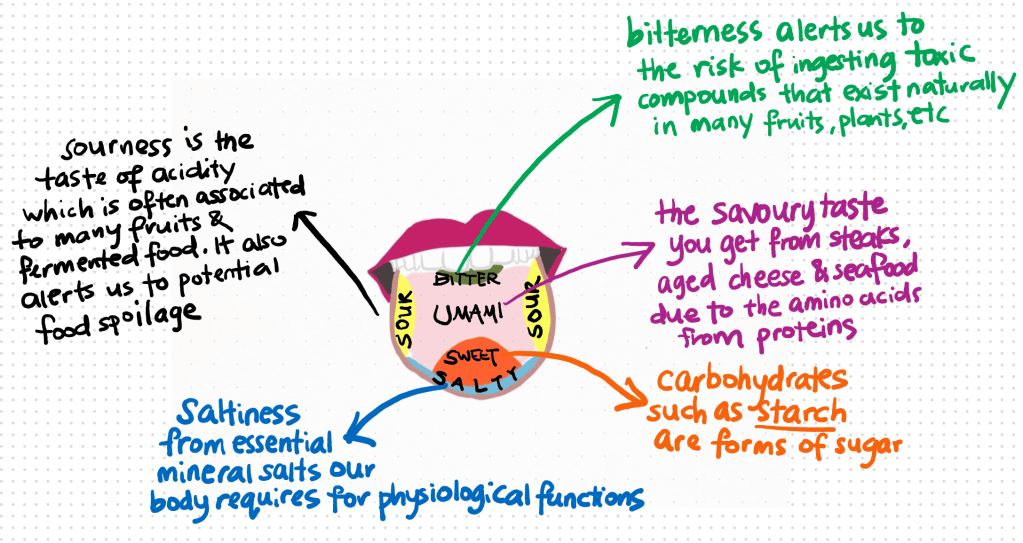
In essence, food is made up of four classes of nutrients: carbohydrates, proteins, fats, and vitamins and minerals. The functional groups carried by these macromolecules interact with our taste receptors for us to identify as the aforementioned tastes.
PracticallyScience.com has brilliant infographics to make learning a snap. The first below gives examples of organic molecules that the different sections of our taste buds detect.
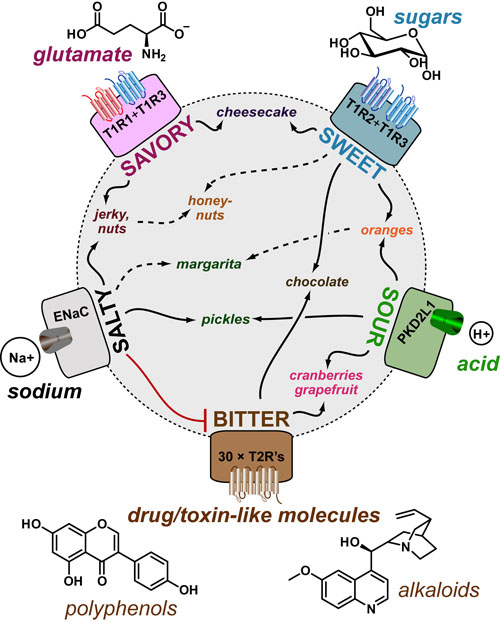
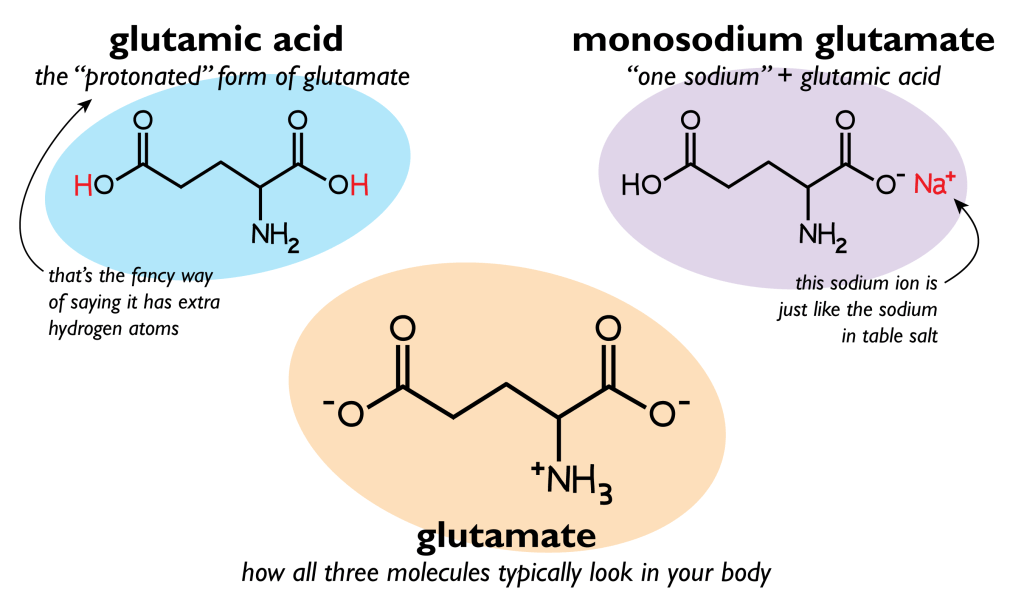
Remember the fifth taste, UMAMI? Umami is a Japanese word with the meaning of ‘a pleasant savoury taste’. This binding taste is all thanks to the amino acid L-glutamate, or glutamic acid C5H9NO4.
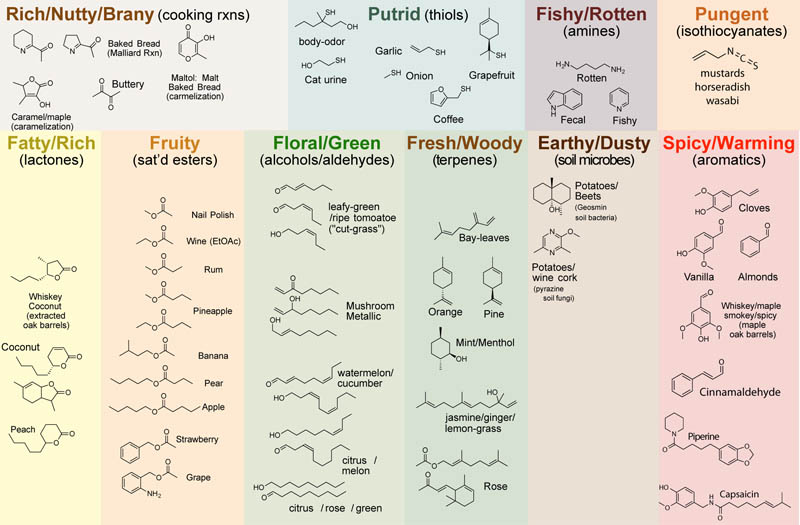
Complementing the experience of our taste buds are also the aromas that are like swirls of fairy dust that envelope the blessed ones, captivating their olfactory senses and violently triggering the synapses to do a little body gyration as proof of the euphoria of having ingested the most wonderful food in the world. The second infographic by the same good duo at PracticallyScience.com shows the compounds responsible for the many smells that we have come to love and hate.
Now that you have been properly initiated, run along to make yourself (and your parents) a reservation at the prestigious restaurants or get ready to join the snaking queues at the hawker stalls featured in the Bib Gourmand. Perhaps, you can impress the decorated chefs with your ‘glutes’ – the glutamates, that is!
Credits: Char Kway Teow, Michelin Guide Singapore; PracticallyScience.com; Discovermagazine.com

