The highly anticipated Netflix-original film, The King – starring Timothee Chalamet, Joel Edgerton, Sean Harris, Lily-Rose Depp, Robert Pattinson and Ben Mendelsohn – was released on the streaming giant’s site just a week ago. Set in the Middle Ages, this historical film centres on the rise of the young scion of King Henry IV of England from obscurity to be crowned as King Henry V.
The Medieval Times conjures up imagery of countless battles and bloodbaths; majestic troops adorned with hefty iron armours, straddling war horses, wielding primitive weapons of swords and arrows, and charging fearlessly into their enemies’ territories.
The drama often overshadows the intelligence the people who lived centuries ago had in terms of food ‘technology’. Where game and fresh fish were caught seasonally, crops viability dependent on seasons, the medieval people, especially the poor peasants, had to know how to store their food supplies for weeks and months, or in anticipation of colder season or even famine. There was no such thing as refrigeration. They had to work with the elements of nature, earth (to bury food) and their wits.
One of the simplest and most prevalent food preservation techniques that they had mastered was salting. HEAVY SALTING. Unlike the modern chefs and gourmands who mostly use salt as a condiment to elevate the flavours, the ancient people rubbed bagfuls of salt onto their raw meats, steeped them in saturated brine water or hung them up to air-dry after applying butter or animal fat; vegetables, eggs, fish were also pickled by immersing fresh produce in saltwater brine to allow natural fermentation by the microbial organisms present in the food until the foods were no longer considered raw. All these were typically carried out in the fall seasons and ensured that when the harsh winter came and where food was scarce, soldiers could sustain their energy and the peasants could still survive.
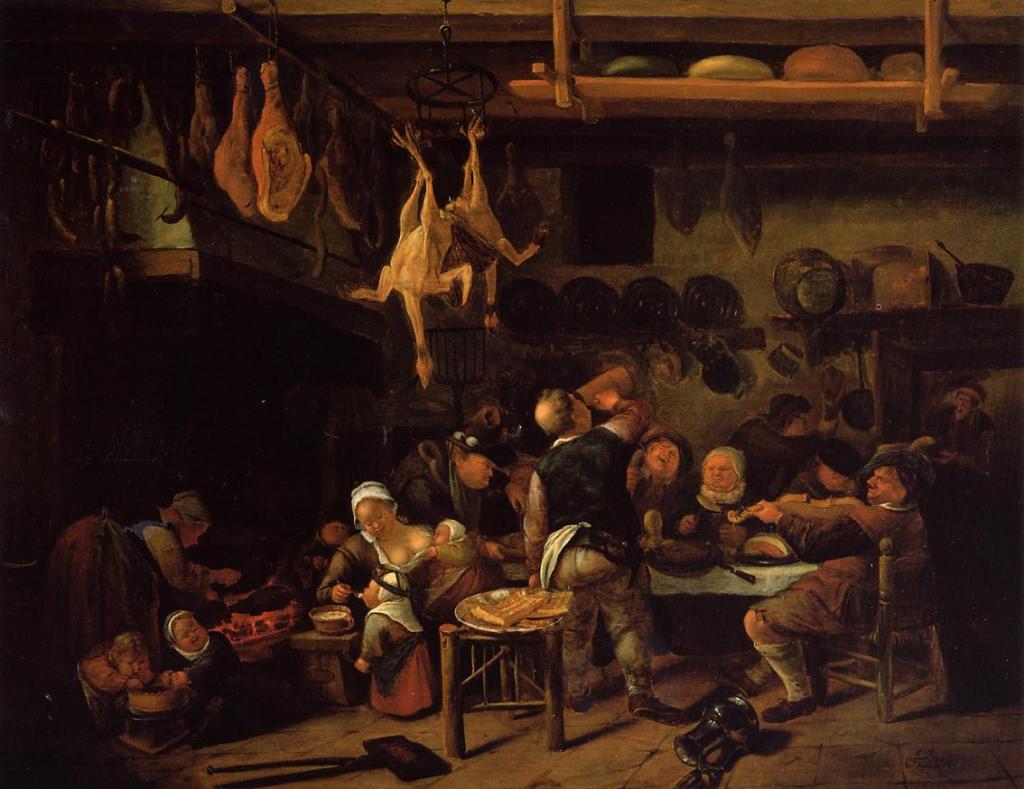
Extracted from useum.org
So how does salting or curing preserve the food?
As you may recall, osmosis describes the net movement of water molecules from a region of higher water potential (or lower salt concentration) to a region of lower water potential (or higher salt concentration).
By encasing their meats (with higher water potential) with salt, the salt draws out the water molecules in the meats and dehydrates them while the salt diffuses into the meats. Without moisture, the growth of bacteria is inhibited and so food spoilage takes a longer time to occur.
Also! This crystalline substance is quite a force to be reckoned with! Salt can kill some types of bacteria by the same process – emptying the bacterium cells of water. As you know, water is the essence of all life, even in microbes. Watch this interesting real-time massacre of micro-organisms under the microscope. (close up action at time stamps: 0:36 and 1:46)
Does it now make complete sense for you to start gargling saltwater as part of your healthy oral routine? #sharingiscaring

